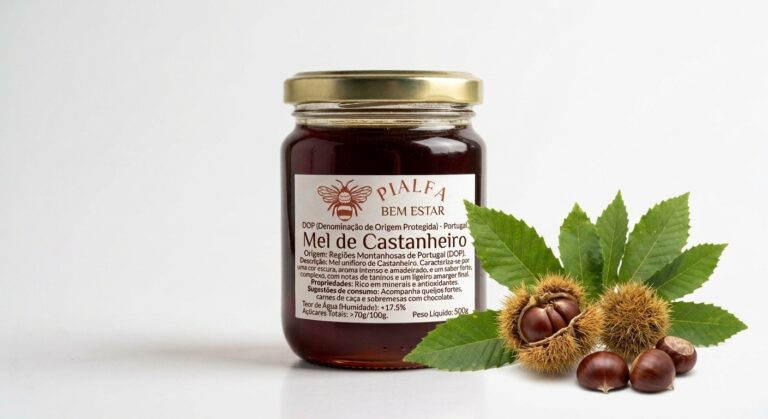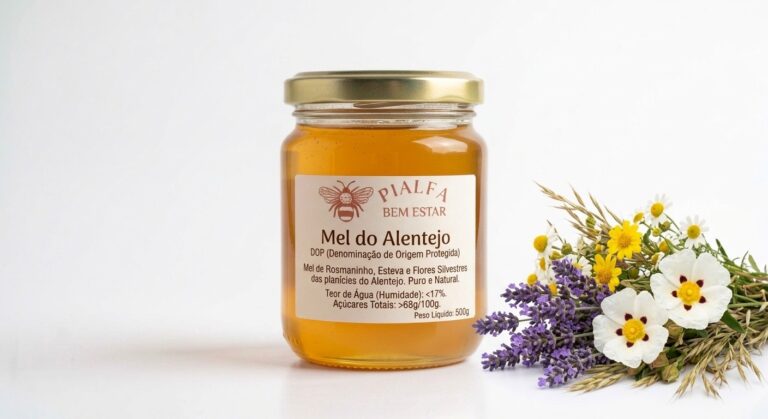

Choosing well and knowing how to store honey properly is half the pleasure of having it at home. This guide sums up what to read on the label, what to expect from the texture and how to keep the jar, based on general good food practice and the reality of Portuguese honey.
A good jar that is well looked after keeps its aroma and texture for longer. A jar left poorly closed or exposed to heat and moisture loses its flavour quality faster, even if it still tastes “sweet”.
How to choose: what the label should say
Look for the product name (“honey”), the business responsible for the product, the origin where stated, the net weight and the best-before date. If there is a floral or regional reference (for example French lavender, heather, chestnut, a mountain range or region), treat it as information about the batch, and choose transparent suppliers.
Don’t decide on colour alone: dark and light honeys can be equally genuine, just with different profiles. EU honey legislation sets requirements for composition and naming; at home, consumers benefit most from clear labels and good storage habits.
Compare, for example, French lavender, heather and chestnut honey in the natural Portuguese honey category to see how varied they are.
Signs of quality when buying
- Intact, well-sealed packaging.
- Clear and complete information.
- An even texture or natural crystallisation with no signs of fermentation (an alcohol smell or unusual foam). If in doubt, don’t eat it and contact the seller.
Storing honey at home
Honey is hygroscopic: it absorbs moisture from the air if left open. So close it tightly after each use, keep it somewhere cool, dry and away from direct light, and use a clean, dry spoon. Crumbs and moisture speed up unwanted changes.
In most cases there’s no need to refrigerate it; strong heat next to the hob or a very sunny window is usually worse. A well-ventilated pantry cupboard is generally enough.
International reference standards for honey (such as the Codex Alimentarius Standard for Honey) focus on composition and moisture limits for honey on sale. At home, what matters most is protecting the jar and following the label.
Crystallisation: what to do
Crystallisation is natural and common. It depends on the sugar composition and the temperature. If you prefer runny honey, place the jar in a gentle bain-marie without letting the water boil. Avoid sudden heating and unnecessary repeated cycles of warming and cooling.
Once it’s runny again, keep it tightly closed. If you like the creamy texture, simply use the set honey on bread or in yoghurt.
Common mistakes
- Leaving the jar open on a damp kitchen worktop.
- Wetting the spoon and dipping it back into the honey.
- Exposing honey to strong heat for long periods.
- Ignoring the date or damaged labels.
- Storing it next to strong-smelling foods without a tight lid.
Choosing by use
For tea and yoghurt, more delicate profiles usually go down well. For cheese and savoury cooking, more intense profiles can balance better. Products with nuts call for careful reading of the allergen information.
If you’re just starting out, a versatile highland honey such as Terra Quente and a floral one such as French lavender cover most everyday uses.
Frequently asked questions
Does honey “never go off”?
It is stable when well produced and well stored, but don’t ignore the label, the smell or the appearance. If in doubt, don’t eat it.
Can I keep honey in the fridge?
You can, but it often speeds up crystallisation and isn’t necessary. A dry, cool cupboard is better.
Honey for babies?
Do not give honey to children under 12 months old.
Can I mix different honeys in the same jar?
You can for immediate use in a recipe, but mixing “original” jars makes it harder to track the batch and date. It’s better to mix when serving.
Monthly pantry checklist
Once a month, check that lids close properly, that there’s no moisture around the rim and that the date is still valid. If you have several open jars, use the oldest first. Writing the opening date on the jar with a marker helps in busy households.
If you notice an unusual smell, fermentation or a suspicious appearance, don’t eat it and contact the shop. Most problems at home come from damp spoons and badly closed jars, both easy habits to fix. Keep honey away from strong heat sources and prolonged direct sunlight.
When you buy a new jar, match your choice to how you mainly use honey at home: tea and yoghurt call for gentler profiles, while cooking and cheese call for more character. That way you’re less tempted to open too many jars at once, and everything keeps better.
Conclusion
Choosing Portuguese honey means reading the label carefully and embracing a wide range of aromas and textures. Storing it is mostly about closing it well, protecting it from moisture and avoiding excess heat.
To keep discovering jars and origins, visit the honey page or the Pi Alfa shop. If you have any questions about an order, use the contact page.
Partilhar
Facebook
Twitter
Pinterest
Artigos recentes