
Honey is a natural product with a wide range of aromas, colours and textures. Heather honey doesn’t necessarily behave like rosemary honey, and that diversity is part of what honey is. When buying, the best way to judge whether you’re looking at real honey isn’t a kitchen experiment, but checking the label, the origin and how much confidence the producer inspires.
What does “honey” mean?
In the European Union, the name “honey” is reserved for the natural product made by bees from flower nectar or plant secretions. It must not be mixed with syrups, sugar or other ingredients. Once sugars or syrups are added, it is no longer pure honey, and that composition has to be reflected in the product name and information.
Adulteration can be hard to spot with the naked eye. Syrups from different sources can change sweetness, flow and colour without leaving an obvious sign. That’s why reliable confirmation depends on laboratory analysis and official controls, not on a single clue noticed at home.
Start with the label
Read the ingredients list: for pure honey, only “honey” should appear. Check the country or countries of origin too. A clear statement such as “Portugal”, a region or a floral source tells you more than a vague mention. The name and address of the responsible business, the batch number, the best-before date and storage conditions should all be shown.
Be wary of jars with no verifiable origin, exaggerated claims or prices far below the norm for a product with an identified origin and producer. A low price alone doesn’t prove adulteration; it’s simply a reason to look more closely at the labelling and the seller.
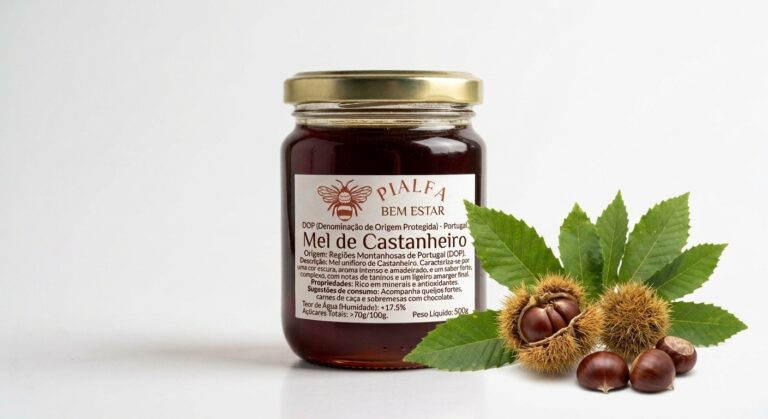
It’s also worth separating floral origin from geographical origin. A description like “chestnut honey” refers to the main plants the bees visited; it doesn’t replace the country of origin. The information should be consistent across the whole jar and make it clear who placed the product on the market. If the label is confusing, incomplete or doesn’t let you trace the responsible business, choose something else.
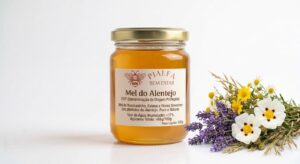
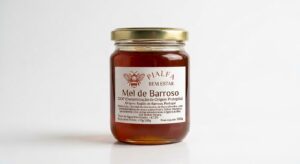
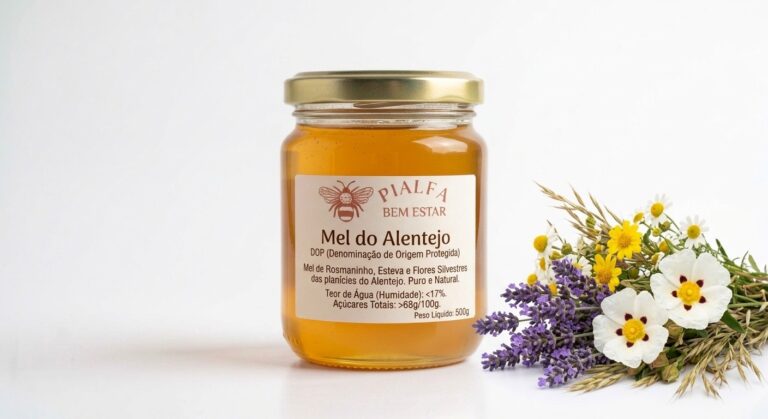
Where a PDO (Protected Designation of Origin) exists, the product is tied to a product specification and a defined geographical area. PDO doesn’t mean that honey without it is inferior, but it adds a guarantee of origin and production rules. Look for information about the apiary, the region and the harvest as well.
Colour, aroma and crystallisation vary
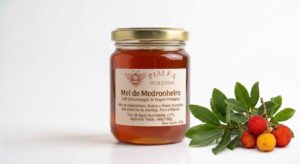
Portuguese honey can be very light, golden or dark. Heather honey tends to have its own aroma and colour; chestnut honey is often darker and more intense; rosemary honey is usually delicate and floral; and strawberry tree honey can taste bolder and slightly bitter. These differences are natural and can’t, on their own, tell you whether a honey is pure or adulterated.
Crystallisation is natural too. Many honeys crystallise over time, some quickly and others slowly, depending mainly on their sugar composition, floral source, temperature and storage. Crystallised honey hasn’t gone off, and honey that stays runny for a long time isn’t automatically adulterated. You can make it runny again by warming it gently in a bain-marie; excessive heat, however, can spoil its aroma and quality.
Why home tests are misleading
Popular tests such as dropping honey into water, holding a flame to it, rubbing it on your thumb or watching whether it “threads” may be interesting, but they are not reliable ways to confirm authenticity. Viscosity depends on temperature and water content; how it dissolves depends on the mixture and the temperature; and a flame can behave similarly with very different products. None of these tests reliably detects added syrups.
Treat them at most as observations with no conclusive value, never as proof that a jar is genuine or adulterated. If you have a real doubt, keep the packaging, batch number and receipt, and contact the producer, the seller or the relevant authorities. Only proper analysis can establish the composition.
Choose transparent producers
Favour beekeepers, cooperatives and shops that state the origin clearly and answer questions about the harvest, the flora and the packing. A responsible producer can explain why two batches differ in colour or aroma and keeps each batch traceable. Make sure the jar is intact and store your honey tightly closed in a dry place, away from light and heat.
In short, there’s no magic home test. The safest choice combines a complete label, an identified origin, PDO certification where relevant, characteristics that match the variety and a producer you can trust. That way you can enjoy the diversity of Portuguese honey with realistic expectations and clear information.
Want to try Portuguese honey with a traceable origin? Visit our shop: see the honeys available at Pi Alfa.
Partilhar
Facebook
Twitter
Pinterest
Artigos recentes