What makes chestnut honey special?
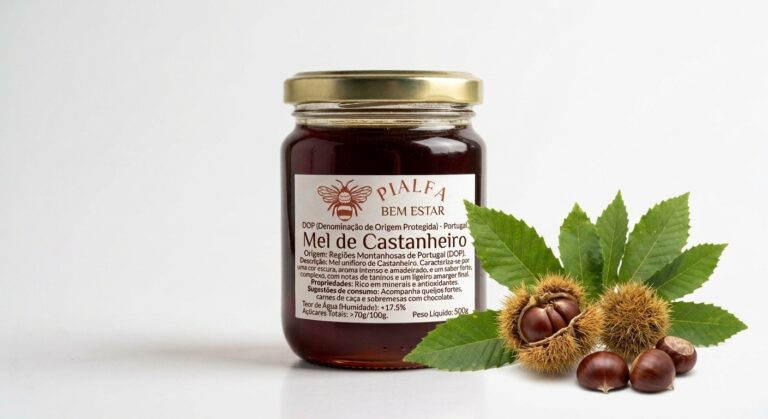
Chestnut honey is known for its bold profile and its balance of sweetness with a subtle bitterness. Its colour usually ranges from dark amber to brown, with warm highlights. On the nose it can show notes of wood, nuts and not-too-sweet caramel. On the palate it lingers, with a slightly dry finish, which sets it apart from lighter, more floral honeys.
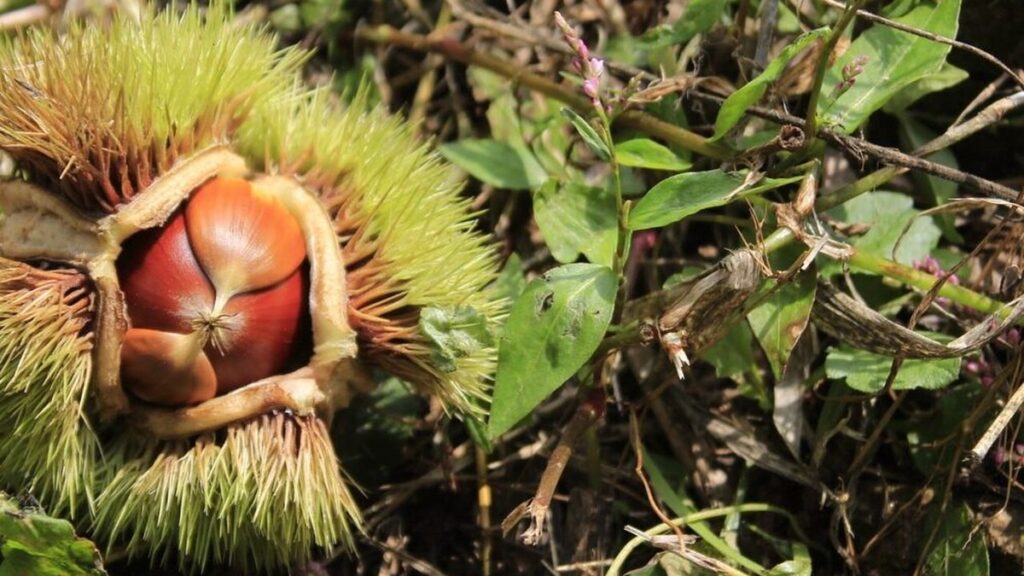
It comes from the nectar of chestnut tree blossom, a tree that shapes many rural and mountain landscapes in Portugal. As with any single-flower or predominantly floral honey, its sensory identity isn’t exactly the same in every harvest. Soil, climate, altitude, flowering period and other nearby plants all influence the result. So two harvests of chestnut honey can share the same character while still showing subtle differences.
To see the jar currently available, visit Pi Alfa chestnut honey. The product page has its presentation and batch details.
Colour, crystallisation and texture
The darker shade of chestnut honey comes from its floral source and doesn’t, by itself, signal higher or lower quality. What matters is a clean aroma, an even texture and clear information about origin. Over time the honey may crystallise. How quickly that happens depends on its natural composition and the storage temperature.
Once crystallised it becomes more opaque and firm, but it’s still great for spreading or cooking. To make it runny again, stand the jar in a bowl of warm water and heat it slowly. Avoid boiling the water or leaving the jar in the heat for too long: high temperatures can change the aroma and colour. Never put a closed jar in the microwave, as it heats unevenly.
Pairings with bread, cheese and fruit
Chestnut honey’s flavour needs ingredients that can keep up with it. A slice of rye bread, cornbread or slow-fermented sourdough gives a base with enough acidity and texture. On a cheese board, try it with aged cheese, goat’s cheese or semi-hard varieties. The sweetness rounds out the saltiness, while the toasty notes echo the ageing.
With fruit, it works well with pear, apple and fig. Add a little to roasted fruit or drizzle a few drops over a pear, walnut and cheese salad. It also goes well with plain yoghurt and nuts, and you don’t need much. The idea is to let the honey’s character play its part in the dish, not to drown out every other flavour.
How to cook with chestnut honey
For a salad dressing, whisk a teaspoon of honey with olive oil, cider vinegar, mustard and black pepper. It’s lovely with green leaves, roasted squash and cheese. To glaze roasted vegetables, thin it with olive oil and add thyme or rosemary; brush it on in the last few minutes so it doesn’t darken too much.
In desserts, chestnut honey shines in simple recipes. Use it to sweeten apple compote, finish a pear tart or fold it into a yoghurt cream. In cake and biscuit doughs, remember that it adds liquid and colour, so you may need to adjust the flour slightly or cut back on another liquid. Start by replacing only part of the sugar and note the ratio you like best.
In drinks, a small spoonful can enrich a herbal tea or a glass of warm milk. Add the honey once the drink is no longer boiling to better preserve its aroma. A modest amount is enough, especially if the drink already contains sweet ingredients.
Storage and choosing
Keep the jar closed, away from light and from sources of heat and moisture. A cool cupboard is ideal; the fridge tends to speed up crystallisation and isn’t needed for everyday storage. Use clean, dry utensils and always follow the label information.
If you enjoy characterful Portuguese honeys with notes of wood and nuts, try our chestnut honey and explore other options in the Pi Alfa shop. In the kitchen, a little goes a long way to add depth to savoury dishes, fruit and desserts.