
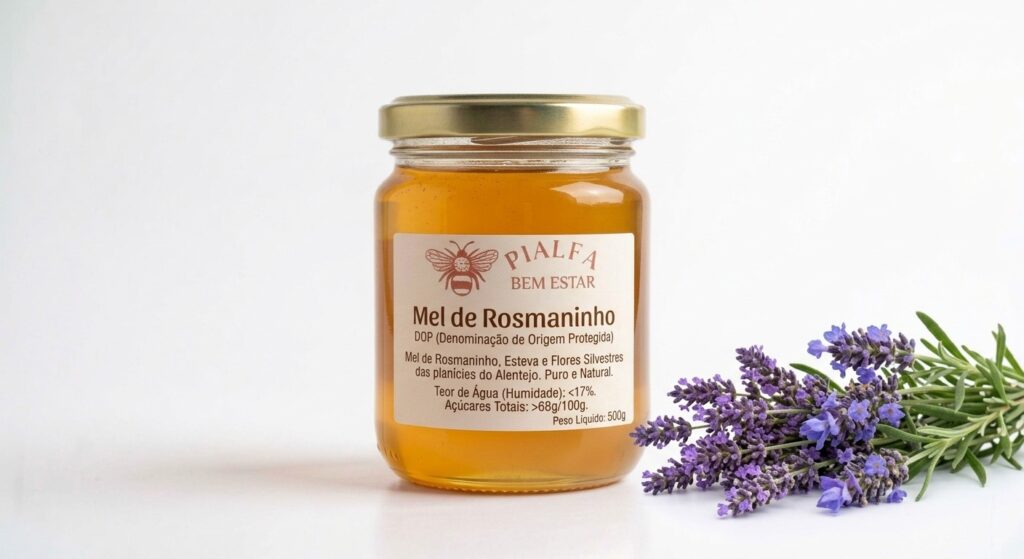
When you open a jar of honey, you rarely think about the calendar behind it. Yet every honey is, in practice, a portrait of a season and a landscape. Bees don’t choose at random: they visit whatever flowers are open near the hive during those weeks. That is why the same apiary can produce very different honeys over the year. In this article we walk through the beekeeping year in Portugal, season by season, to understand where the flavour of each jar comes from.
Why the season changes everything
A single-flower honey, such as Spanish lavender or chestnut, is only possible when one plant dominates the landscape during flowering and the beekeeper harvests right after. Wait too long and other flowers come in, turning it into a wildflower honey. Weather matters a lot too: a rainy spring can halve the harvest, and a dry autumn can wipe out the strawberry tree honey. That is why the same honey can vary slightly in colour and aroma from one year to the next. It isn’t a flaw; it is the sign of a natural product.
Winter: time to rest
From December to February, across most of the country, the hives slow down. The bees cluster around the queen and live on the stores they have put away. There are few flowers and almost no harvest. This is when the beekeeper maintains equipment, checks the weight of each hive and makes sure none runs short of food.
Even so, some plants wake up early. In the milder areas of the south and the coast, the first almond blossoms and a few wild plants appear as early as February and help the bees get going again.
Spring: the great burst of flowers
From March to May, Portugal fills with colour and the hives work non-stop. It is the most generous season of the year.
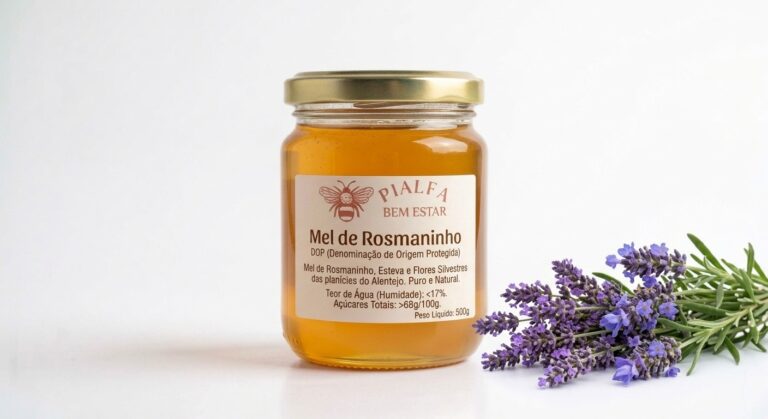
- Spanish lavender. The purple fields of the interior, from Trás-os-Montes to the Alentejo, give a light, floral, delicate honey. Our Lavender Honey is one of the most popular precisely because of that softness.
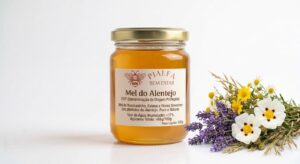
- Alentejo flowers. On the plains, bees visit lavender, viper’s bugloss, thistles and countless wildflowers. The result is Alentejo Honey, golden and well balanced.
- Spring heather. In the mountains of the north and centre, some heather species bloom now and start to form the base of dark, intense honeys.
- Azores. On the islands, the mild, humid climate stretches out the flowering season, giving Azores Honey fresh, gentle notes.
In the Terra Quente of Trás-os-Montes, sheltered valleys warm up early and the bees enjoy a long spring full of flowers.
Summer: chestnut trees and mountains
June and July bring one of the most awaited moments in the north and centre: the chestnut bloom. The trees fill with long pale flowers whose strong scent carries a long way. They give us Chestnut Honey, dark, slightly bitter and highly aromatic.
Meanwhile, in the mountains, the vegetation stays green for longer. Think of Montesinho Natural Park, Barroso and the Serra da Lousã, where heather, chestnut and wild plants mix to create honeys with real personality.
At the end of summer, some heathers bloom again on the slopes, and that is where part of the deep character of Heather Honey comes from. We tell you more in the article Heather honey: the dark, intense honey of Portugal’s mountains.
Autumn: the rarest honey
When almost everything has dried up, the strawberry tree blooms. Between October and December, in the hills of the south and centre, its small bell-shaped flowers give the bees one last resource before winter. Strawberry Tree Honey is rare, bitter and surprising, and the harvest depends heavily on a mild autumn. To compare the two ends of the year, read Lavender honey and strawberry tree honey: two rare Portuguese honeys.
In autumn the beekeeper also starts getting the hives ready for the cold, always leaving a good share of honey for the bees to get through winter.
How to use this calendar at home
Knowing the seasons helps you choose better. A few suggestions:
- For tea, yoghurt and delicate desserts, go for spring honeys, which are lighter and milder.
- For aged cheeses, dark bread and oven dishes, the darker summer and autumn honeys stand up better to strong flavours.
- Try a side-by-side tasting: one light and one dark honey, a spoonful of each, with a sip of water in between. The difference teaches more than any description.
To learn to recognise aromas and textures, we have a guide on how to appreciate Portuguese honey. And if you’re curious about protected designations, we explain it all in PDO honeys of Portugal.
The whole year in one pantry
In our online shop we bring together honeys from several regions and seasons, so you can keep spring and autumn on the same shelf. We dispatch within 24 hours, shipping is free across the European Union on orders over €50 and every order comes with a small honey as a gift. Registered customers also get 10% off their first order: just create an account before you buy.
Partilhar
Facebook
Twitter
Pinterest
Artigos recentes