
Swapping sugar for honey is one of the easiest changes you can make in the kitchen. But anyone who has tried knows it’s not just a matter of replacing one spoonful with another: the cake comes out darker, the batter is moister and sometimes the result isn’t what you expected. In this guide we explain how to get the swap right, with ratios, temperatures and a few tricks we’ve learned over time.
Why swap sugar for honey
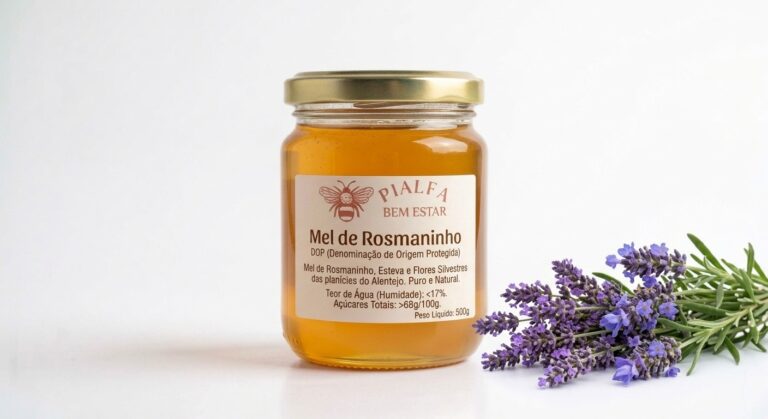
Honey is sweeter than white sugar, so you need less of it for the same effect. It also adds flavour. A cake made with rosmaninho (wild lavender) honey has floral notes; a spiced loaf with heather honey gains depth. Sugar only sweetens; honey sweetens and seasons.
It’s worth being honest about one thing: honey is still a natural sugar and should be used in moderation. The advantage is that you need less, and you’re choosing a natural product with aroma and origin instead of a refined ingredient.
The basic ratio rules
For most recipes, these three rules work well:
- Use less honey than sugar. For every 100 g of sugar, use 70–80 g of honey. If a recipe calls for one cup of sugar, start with three-quarters of a cup of honey.
- Reduce the liquids. Honey is about 17–20% water. For every 100 g of honey, take out roughly 20 ml of milk, water or juice from the recipe.
- Lower the oven temperature. Honey caramelises and browns faster. Reduce the heat by 10–15 °C and allow a few extra minutes of baking.
In very technical recipes such as meringues, sugar is essential to the structure, so the swap isn’t worth it. In yoghurt cakes, biscuits, crumbles, sweet breads and sauces, honey works very well.
Baking soda: the detail many people forget
Honey is slightly acidic. In cakes and biscuits this can make the batter heavier. The fix is to add a pinch of bicarbonate of soda — about half a teaspoon for every 200 g of honey. It neutralises the acidity and helps the batter rise.
Which honey for which recipe
Not every honey suits every use. A simple guide:
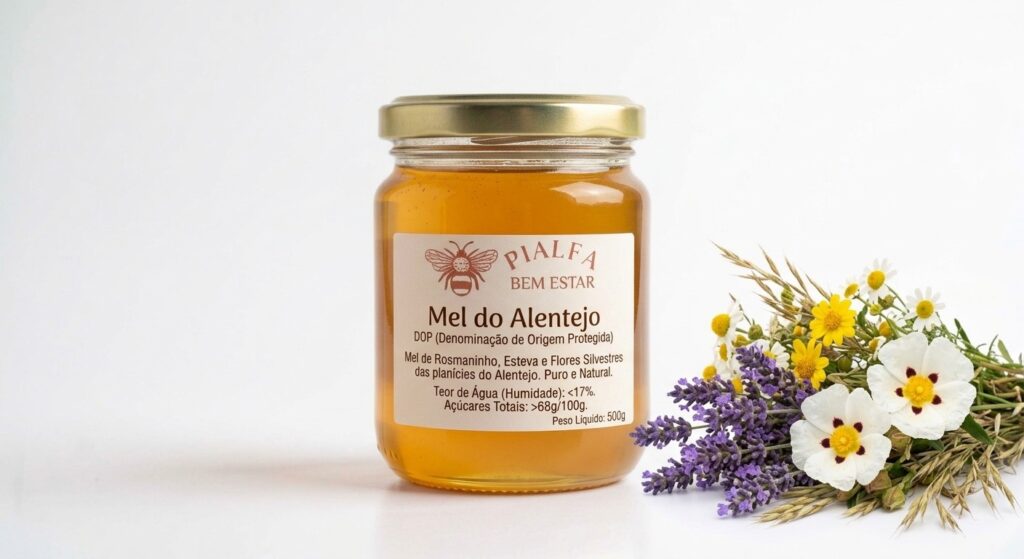
- Delicate cakes, custards and light desserts: mild honeys such as rosmaninho honey or Alentejo honey. They sweeten without masking the other ingredients.
- Spiced breads, nut cakes and oat biscuits: dark honeys such as heather honey or chestnut honey, which stand up to cinnamon, ginger and cloves.
- Sauces, marinades and dressings: a medium-intensity honey such as Montesinho Natural Park honey.
If you don’t know the differences between honeys well yet, our article on the aromas, origins and textures of Portuguese honey will help you choose.
Worked example: honey yoghurt cake
We take the classic yoghurt cake, which uses the yoghurt pot as a measure, and adapt it.
- 1 natural yoghurt
- 2 pots (yoghurt pots) of honey, instead of 3 of sugar
- 3 pots of flour
- Half a pot of sunflower oil or mild olive oil
- 3 eggs
- 1 tbsp baking powder
- ½ tsp bicarbonate of soda
- Zest of one lemon
Whisk the eggs with the honey until frothy. Add the yoghurt, oil and lemon zest. Finally fold in the flour sifted with the baking powder and bicarbonate, without overmixing. Bake at 165 °C instead of the usual 180 °C for 40–45 minutes. Test with a skewer before taking it out. The cake is moister and stays fresh for longer than the sugar version.
Tips that make life easier
- To measure without waste: lightly oil the spoon or cup before measuring the honey. It all slides out and nothing sticks.
- If the honey has crystallised: warm the jar in a bain-marie without boiling. We explain everything in our article on crystallised honey.
- For crisper biscuits: replace only half the sugar with honey. Honey attracts moisture and makes biscuits softer.
- To protect the top: if the cake starts browning too much, cover it with foil halfway through baking.
Outside the oven it’s even easier
Day to day, there’s no secret to the swap. A spoonful of honey in yoghurt instead of sugar, a drizzle over porridge, a little on roast fruit or in a salad dressing. The only rule here: taste and adjust. You’ll find more ideas in our article on breakfasts and snacks with honey.
With hot drinks, let them cool slightly before adding honey so it keeps its aroma.
Start with one recipe
There’s no need to change everything at once. Pick a recipe you make often, apply the ratios in this guide and adjust to taste. After two or three attempts, you won’t want to go back. If you need honey to get started, browse our selection of Portuguese honeys, dispatched within 24 hours with free shipping across the European Union on orders over €50.
Partilhar
Facebook
Twitter
Pinterest
Artigos recentes