
What does PDO (DOP) mean?
In Portugal, DOP (Denominação de Origem Protegida) is the local name for PDO, Protected Designation of Origin. It is a European certification for products whose quality or characteristics are tied to a specific geographical area, and whose production, processing and preparation follow defined rules. For honey, a product specification can set out the area covered, the dominant plants, beekeeping practices, extraction, packing and the checks required.
PDO is more than a description of origin. It is a scheme of protection and verification, with its own rules and a competent control body. When you buy a certified product, look on the label for the official wording and the matching EU logo. A region appearing in a brand name or an information article does not, on its own, prove that a particular jar is certified.
In this article we look at regions traditionally associated with PDO honey designations in Portugal. It is a general explanation and does not claim that the products available at Pi Alfa are PDO certified. For the presentation and details of each item, browse the Pi Alfa shop and always read the label.
Barroso and Montesinho: mountain landscapes
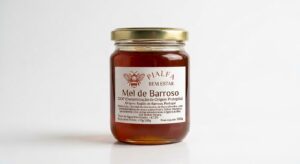
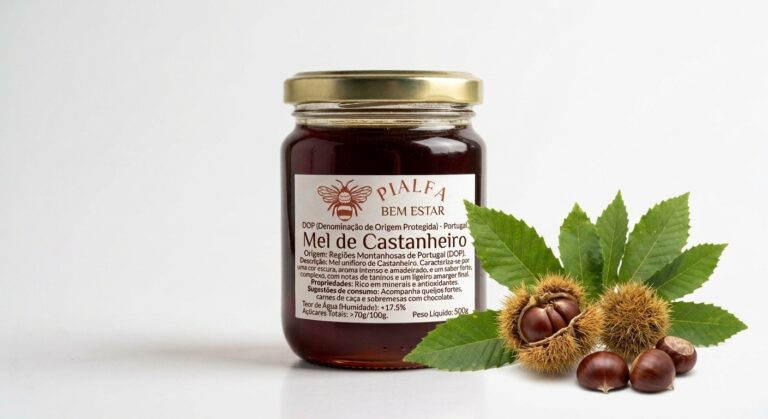
Barroso honey is associated with the Barroso area in northern Portugal, a land of high ground, pastures, heath and traditional farming. The upland landscape offers a succession of flowering plants through the year, which helps produce honeys with a character of their own. Colour and flavour can vary with the floral make-up of each harvest.
Further north-east, Montesinho Natural Park honey points to an area of great natural diversity, with woodland, heath and the valleys of Trás-os-Montes. The geographical setting matters, because a PDO links the product to real local conditions, not just to an appealing name. Tasting may reveal floral, herbal or deeper notes, depending on the dominant botanical source.
Terra Quente and Serra da Lousã: inland contrasts
Terra Quente honey is tied to the climate and flora of a part of Trás-os-Montes known for hot summers, olive groves, cork and holm oak woodland and Mediterranean vegetation. That mix of terrain and available plants creates a distinct setting for beekeeping. As with any honey, the actual harvest is what shapes the result in the jar.
The Serra da Lousã offers a different scene: slopes, valleys and forested areas in central Portugal. Altitude and the variety of flowering species help define its beekeeping landscape. In the kitchen, mountain honeys pair well with bread, cheese and fruit, but the best use always depends on the taste profile of each batch.
Alentejo and the Azores: places with identity
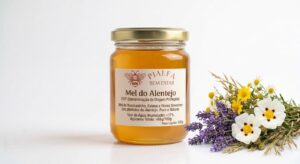
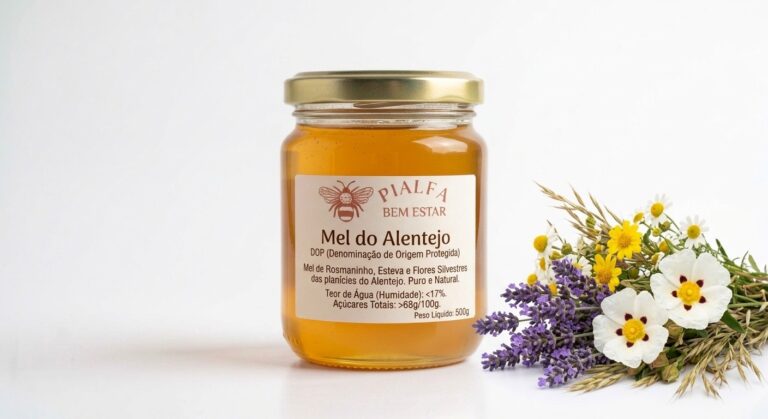
Alentejo honey evokes a region of wide horizons, oak woodland, holm oaks, rockrose and other Mediterranean plants. Nectar availability shifts with the seasons and between sub-regions, which leads to natural differences from one harvest to the next. Served with bread, cheese or fruit, it lets you taste the link between flavour and place.
Azores honey comes from an island setting, where the Atlantic climate, pastures and island vegetation make up a distinctive landscape. A protected designation takes exactly these specific conditions into account and sets limits to guarantee the geographical link. Flavour, colour and texture should be judged from the information on the jar and by tasting the batch.
How to read a honey label
Look for the legal name of the product, the origin, the responsible operator, the batch number, the best-before date and the storage conditions. If the pack says PDO (or DOP), check the official wording and the EU logo. The word “regional” or the name of an area is not a substitute for certification. It is also normal for honey to crystallise; this change in texture is natural and, on its own, says nothing about origin or quality.
Keep the jar closed in a dry, cool place away from light. To taste it, try a spoonful with plain bread and compare it with cheese or fruit. When exploring the range in the Pi Alfa honey shop, rely on the information for each product and choose by flavour and how you plan to use it. Getting to know the regions is a way to appreciate the variety better, without confusing geographical tradition with automatic certification.
Partilhar
Facebook
Twitter
Pinterest
Artigos recentes