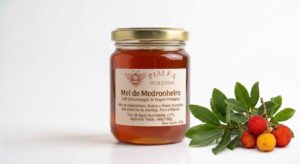

Few things are as easy to put together, or as warmly received, as a cheese board. A Sunday with the family, dinner with friends or an autumn evening: just open the fridge, cut a few slices and put everything in the middle of the table. What many people still haven’t tried is adding one or two honeys to that board. Honey isn’t only for dessert. Next to an aged cheese or a goat’s cheese, it turns an ordinary starter into a small tasting.
At home, the cheese board is almost a Sunday ritual. It started as a fix for days when nobody felt like cooking and ended up as the favourite moment of the week. Over the years we’ve tried plenty of pairings, some excellent, others not so much. Here are the ones that stuck.
Why honey and cheese go so well together
It’s all about contrast. Cheese is salty, rich and often a little tangy or sharp. Honey brings sweetness, floral aromas and a texture that coats the palate. Together, the salt lifts the sweetness and the sweetness softens the cheese. It’s the same idea as ham with melon, or cheese with quince paste, a very Portuguese tradition.
There’s another detail: every honey carries the character of the flowers it came from. Heather or chestnut honey is dark and intense; French lavender honey is light and delicate. That lets you build different pairings on the same board without repeating yourself.
Which cheeses to choose
A good board is about variety, not quantity. Three or four cheeses are enough, as long as they differ in texture and strength:
- A soft, runny cheese: Serra da Estrela, Azeitão or another soft cheese. It’s eaten with a spoon and is always the first to go.
- An aged sheep’s or mixed-milk cheese: a Nisa, a Serpa or a well-aged Manchego. Its strong flavour stands up to intense honeys.
- A goat’s cheese: fresh or semi-aged. Its tang calls for a mild, floral honey.
- A mild cow’s cheese: a São Jorge or a good mild cheddar, for those who like gentler flavours.
If your guests enjoy bold flavours, a blue cheese is a safe bet. With dark honey it’s one of the most popular pairings in any restaurant.
Which honey to serve with each cheese
There are no fixed rules, but some pairings almost always work:
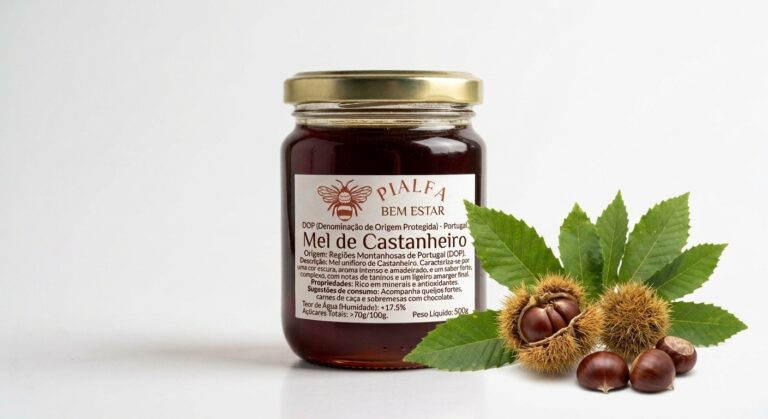
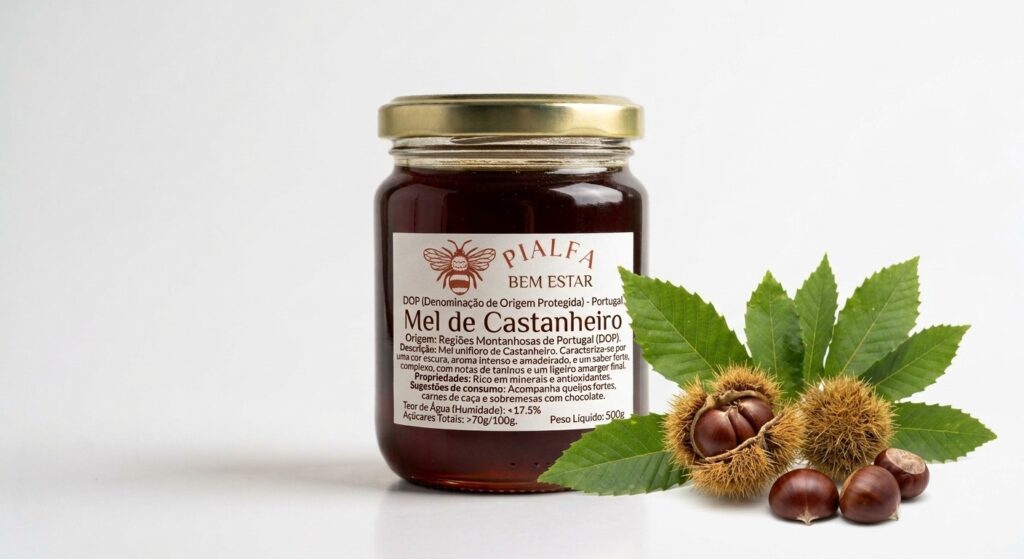
- Strong, aged cheeses: Chestnut Honey has a slightly bitter finish that balances salt and fat. Heather Honey, dark and full-bodied, is also a great match for well-aged sheep’s cheeses.
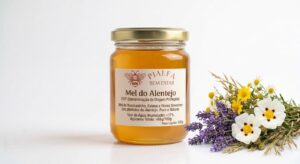
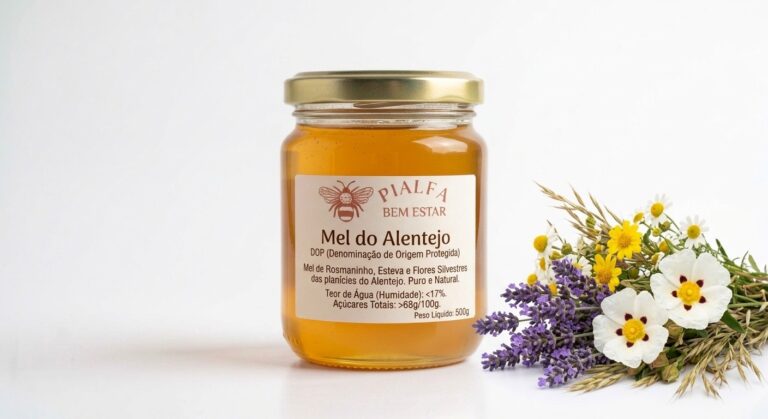
- Goat’s cheeses: they want a light honey. Lavender Honey and Azores Honey are mild and floral and don’t mask the cheese.
- Soft, runny cheeses: a medium-strength honey works well here, such as Serra da Lousã Honey, which complements without taking over.
- For texture lovers: Honey with Walnuts brings sweet and crunchy together in one spoonful, and is lovely on a fresh cheese.
To get to know each honey better before choosing, we have a guide to the aromas, origins and textures of Portuguese honey.
How to build the board, step by step
1. Pick your base
A wooden board, a slate or even a large tray. What matters is having enough room so the cheeses aren’t crowded.
2. Take the cheeses out of the fridge early
Half an hour to an hour before serving. Cold cheese loses its aroma and turns firm. Soft cheeses need longer to become creamy.
3. Place the cheeses around the corners
Give each cheese its own area of the board and its own knife. Cut a few pieces to get people started and leave the rest whole so it stays fresh.
4. Serve the honey in small bowls
One bowl per honey, with a small spoon. Next to each cheese, put the honey that suits it best. Your guests get the hint without any explanation.
5. Fill the gaps
Walnuts, almonds, dried figs, grapes, slices of pear or apple, a few olives and some cured ham or chorizo. For bread, thin crackers, rye bread or sliced cornbread.
Small tips that make a difference
- A little freshly ground black pepper over cheese and honey. It sounds odd, but it brings out both flavours.
- Fresh herbs such as thyme or rosemary, on goat’s cheese with light honey.
- Crystallised honey works too. Its creamy texture is perfect spread on a cracker with cheese. If you prefer it runny, we explain how to make honey liquid again without spoiling its flavour.
- Don’t overdo the honey. A thin drizzle is enough. The cheese should stay the star.
What to drink?
A tawny port or a Moscatel de Setúbal goes beautifully with aged cheeses and dark honey. For goat’s cheeses, a crisp white from the Douro or Alentejo. For non-drinkers, a warm black tea or a natural apple juice works very well.
Our favourite pairings
There are no absolute rules, and your own taste matters more than any guide. But some pairings never fail in our house. A sharp, aged sheep’s cheese with a drizzle of dark heather honey: the honey’s gentle bitterness balances the cheese’s strength. A fresh goat’s cheese with lavender honey and a few thyme leaves: light, fresh and perfect for summer. A runny Serra da Estrela with chestnut honey: intense meets intense, for those who love bold flavours.
And one that surprised everyone at a dinner with friends: blue cheese with light honey and toasted walnuts. It sounds like a lot, but the sweetness of the honey softens the saltiness of the cheese in a really interesting way.
Mistakes we’ve already made
Putting too many cheeses on the board. Six or seven types confuse the palate; three or four well-chosen ones are plenty. Taking the cheeses out of the fridge at the last minute: they need half an hour at room temperature to show their full flavour. And serving honey in a closed jar instead of a small bowl with its own spoon. It seems minor, but people use it far more.
An idea for your next family get-together
Instead of serving the board as a starter, make it the centre of a relaxed Sunday supper. With two or three different honeys, the kids can taste and pick their favourite, and the conversation always ends up on which goes best with what. It’s an easy way to discover honeys from different regions of Portugal without leaving home.
All of pi alfa’s Portuguese honeys are available in our shop, shipped within 24 hours, with free delivery across the European Union on orders over €50. And every order comes with a small free honey, just right for your next cheese board.
Partilhar
Facebook
Twitter
Pinterest
Artigos recentes