
Anyone who exercises fairly regularly has wondered at least once what to eat before heading out for a run or after an hour at the gym. Among bars, gels and sports drinks, there is one simple food that many athletes have used for decades: honey. In this article we explain, in practical terms, how honey can fit into an active routine — no exaggeration, no miracle promises.
Those who know us know that, alongside bees, we love hiking in the hills. On one of those climbs, out of steam halfway up, a friend handed us a spoonful of honey from his backpack. It worked better than any bar. Ever since, honey always comes with us.
Why honey is interesting for people who exercise
Honey is mainly a source of carbohydrates, largely glucose and fructose. Glucose is absorbed quickly and becomes available as energy soon after. Fructose is absorbed more slowly. This combination makes honey a handy fuel for medium-length efforts such as a run, a long walk or a bike ride.
Natural honey also contains small amounts of minerals and compounds that vary with the flowers the bees visited. That does not make it a supplement, but it is a more interesting alternative to refined sugar. We explain these differences in more detail in our article on types of honey and how to choose a quality honey.
Remember that honey is still sugar. One tablespoon has around 60 calories. If you do light exercise or are watching your weight, the amount matters.
Before training
Ideally, eat something one to two hours before exercise. A light meal with carbohydrates and little fat helps avoid stomach discomfort. A few ideas:
- Wholegrain toast with honey and banana: a classic — easy and well tolerated by most people.
- Oat porridge with a spoonful of honey: a good choice for early-morning sessions, especially in winter.
- Natural yoghurt with honey and fruit: lighter, for when you train soon after eating.
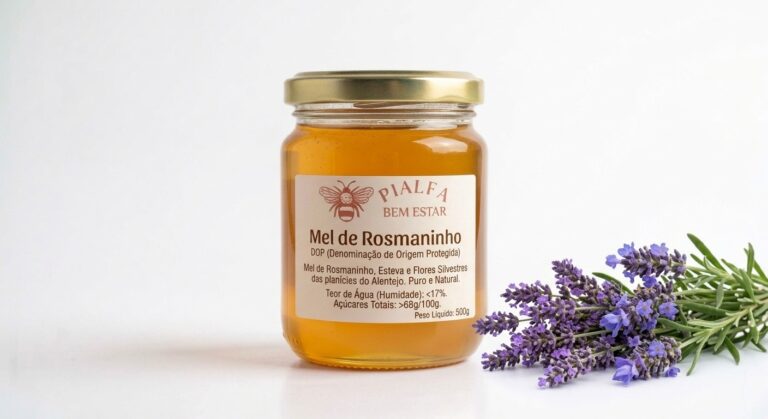
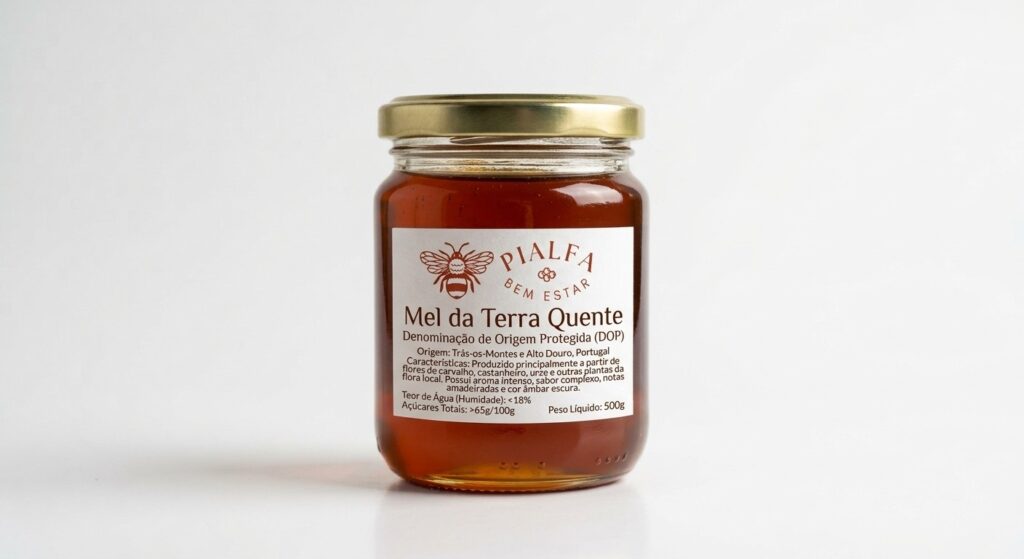
For these moments, a mild, rounded honey such as Terra Quente honey or Alentejo honey goes with almost anything.
If you only have 20–30 minutes before you start, a teaspoon of honey with a little water or half a banana may be enough. Any more, right before training, can feel heavy.
During exercise
For short sessions of up to an hour, you usually don’t need to eat anything — water is enough. For longer efforts, such as a 15 km run, a long bike loop or a mountain hike, some people carry small doses of honey to top up their energy along the way.
A simple option is a homemade drink: half a litre of water, a tablespoon of honey, the juice of half a lemon and a pinch of salt. Shake well and carry it in your bottle. It is no substitute for a race nutrition strategy, but it works well for everyday training.
After training
After exercise, your body needs to replenish energy and get protein to recover. Honey can be part of that meal, but it shouldn’t be the only thing on the plate. Some balanced combinations:
- Greek yoghurt with honey and nuts: protein from the yoghurt, carbs from the honey and healthy fats from walnuts or almonds. Honey with Almonds and Honey with Walnuts bring it all together in one jar.
- Milk, banana, oat and honey smoothie: handy if you train at the end of the day and have no time to cook.
- Rye toast with ricotta-style cheese and a drizzle of honey: simple and tasty.
You’ll find more ideas in our article on honey and nuts in your daily diet.
Which honey to choose
In terms of energy, the differences between honeys are small. The choice is mostly about taste and use:
- Light, mild honeys, such as Alentejo honey or rosmaninho (wild lavender) honey, dissolve well in drinks and don’t overpower the flavour.
- Dark honeys, such as heather honey or Barroso honey, are great on porridge and toast, where their intense flavour shines.
More important than the variety is the origin. A natural honey from a known producer is always a better choice than an industrial blend of doubtful origin. If in doubt, see our guide on how to tell real honey from adulterated honey.
A few precautions
- If you have diabetes or another condition that requires sugar control, talk to your doctor or dietitian before using honey as an energy source during exercise.
- Test it in training, not on race day. Everyone reacts differently. Race day is not the day to try something new.
- Always stay hydrated. No food makes up for a lack of water.
- Honey is not suitable for babies under one year old, as we explain in our article on honey and children.
Practical examples for a training day
To make this more concrete, here are some simple examples. They are general suggestions, not a nutrition plan — everyone is different, and serious athletes should talk to a dietitian.
Early-morning run. A slice of toast with honey and half a banana, about 30–60 minutes before. Light, easy to digest and a quick source of energy.
Long weekend hike. A small jar of honey or a few sachets in your backpack, taking a spoonful now and then with water. Nuts and a little cheese round off the snack.
Evening gym session. Afterwards, a natural yoghurt with honey and oats, or a milk and banana smoothie with a spoonful of honey.
Homemade honey vs. sports gels
Sports gels are convenient and have their place, especially in long events. Honey isn’t trying to replace them across the board. But for many recreational athletes it is a simple, natural and cheaper alternative. Some people even make their own “gel” at home: honey, a pinch of salt and a few drops of lemon in a small bottle. Try it in training before using it in a race — every stomach reacts differently.
In short
Honey is a simple, natural ally for anyone who moves regularly. A spoonful on toast before a run, a drizzle in your yoghurt after the gym or a homemade drink for the Sunday hike. No fuss, no flashy packaging — just the flavour of each region of Portugal.
Find all our Portuguese honeys in the Pi Alfa shop, dispatched within 24 hours with free shipping within the European Union on orders over €50.
Partilhar
Facebook
Twitter
Pinterest
Artigos recentes