
Note: this article is for informational and lifestyle purposes. It does not replace diagnosis, treatment or medical advice. If you have persistent symptoms, speak to a healthcare professional.
Honey, walnuts and almonds combine flavour, texture and energy. Used as part of a meal, they can make simple breakfasts and desserts more interesting — without turning food into promises of instant vitality. At Pi Alfa we value Portuguese honey and traditional pairings with nuts as everyday gestures of mindful nutrition.
Honey composition: water and sugars
Honey is made mostly of sugars and water. The Codex Alimentarius sets, for most honeys, a maximum moisture (water) content of 20%. Data from USDA FoodData Central indicate about 82 g of carbohydrate per 100 g of honey, mainly sugars (fructose and glucose). These figures help guide portions: a teaspoon (around 7 g) is, in many contexts, a practical measure for sweetening without excess.
What walnuts and almonds offer
Nuts contribute unsaturated fats, protein, fibre, vitamin E and minerals (such as magnesium). A small portion (about 20–30 g) with a drizzle of honey can be more satisfying than honey alone. As both are energy-dense, quantity still matters — especially if the goal is balance rather than calorie excess.
Practical benefits of the pairing
- Available energy: honey provides carbohydrate; nuts add fat and protein.
- Texture and pleasure: the crunch of walnuts/almonds with the sweetness of honey supports adherence to healthy habits.
- Versatility: works for breakfast, snacks and simple desserts without an elaborate recipe.
Serving ideas
- Breakfast: natural yoghurt, oats, apple, walnuts and a teaspoon of honey.
- Snack: wholemeal bread with soft cheese, flaked almonds and a drizzle of honey.
- Dessert: baked pear with cinnamon, walnuts and honey poured at the end.
- Before/after light activity: a banana, almonds and a little honey, if it fits your plan.
Safety and common sense
Do not give honey to babies under 12 months. People with diabetes or specific dietary needs should account for total carbohydrate in an individual plan with a healthcare professional. Prefer quality honey and nuts without excess salt or sugary coatings.
How to choose quality honey and nuts
For honey, prefer a clear origin, appearance and aroma typical of the floral source, and avoid overheating (very high temperatures can alter volatile compounds and the sensory profile). Moisture values within Codex limits support microbiological stability and keeping quality. For walnuts and almonds, choose fresh products without rancidity, stored away from light and heat; if salted or caramelised, expect more sodium or added sugar.
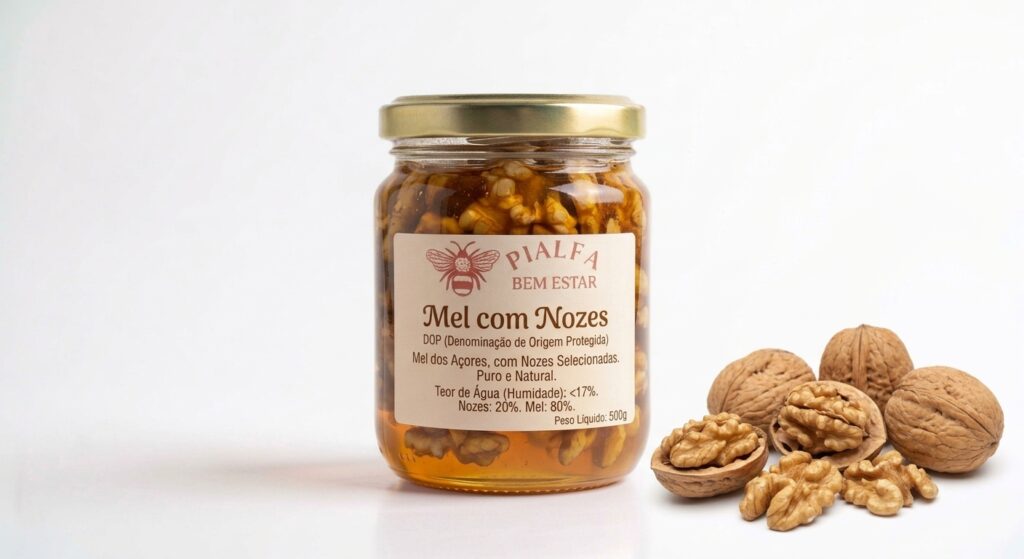
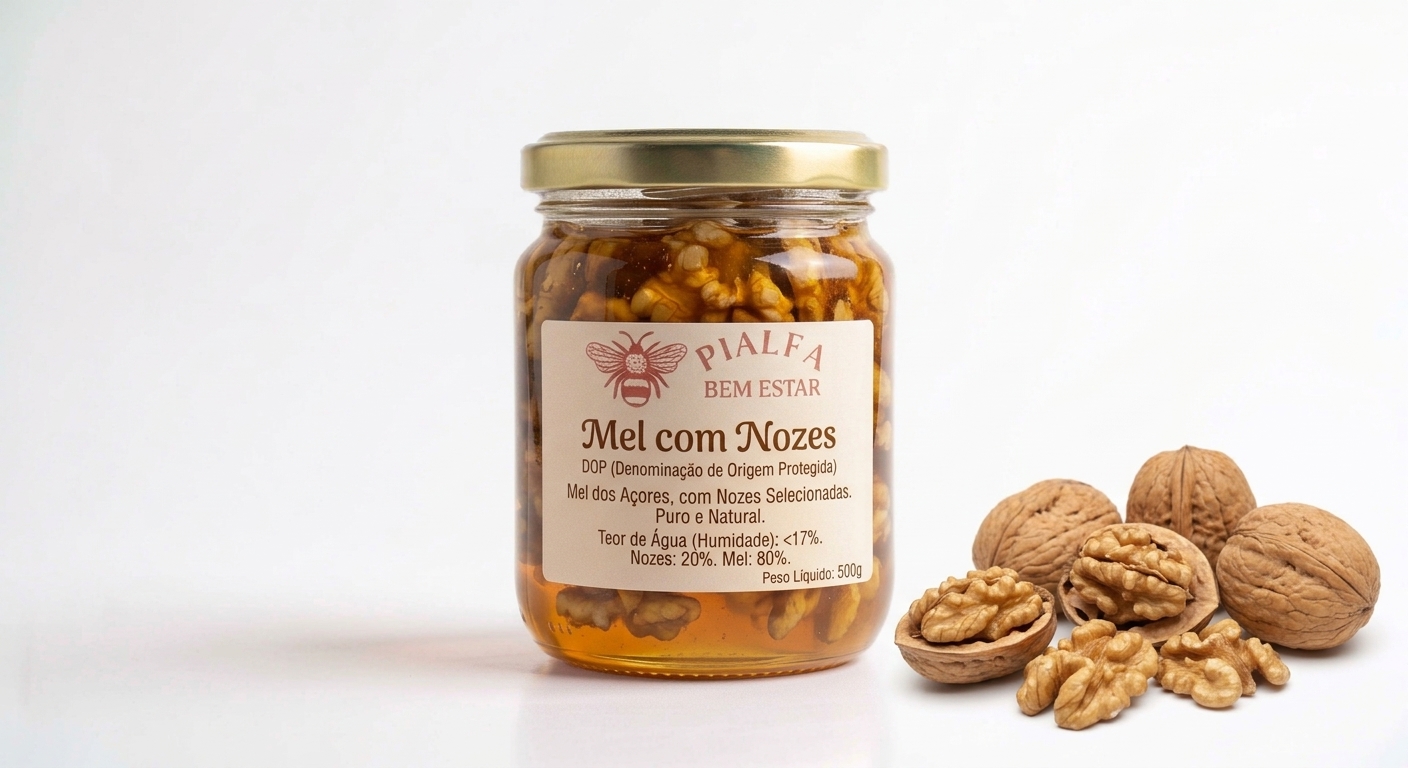
In the Pi Alfa pantry, pairings such as honey with walnuts illustrate this tradition of simple, tasty energy. Use them at home in the same spirit: mindful portions, recognisable ingredients and pleasure at the table. That way honey and nuts become allies of daily nutrition — not marketing shortcuts.
Conclusion
Pure honey and nuts (walnuts and almonds) are a classic duo in daily nutrition: flavour, energy and practicality. With mindful portions grounded in composition data (honey moisture and sugars), this pairing fits well into a wellbeing lifestyle — no miracles, just consistency.