

Honey is a food made by bees from flower nectar or, in some cases, from plant secretions that they collect and transform in the hive. Once stored in the comb, it loses some of its water, matures and is kept as the colony’s food reserve. It reaches our table with very different aromas and textures, shaped by the flora, the climate, the harvest season and the way it is extracted and stored.
What is in honey?
Honey is made up mainly of natural sugars, above all fructose and glucose, and water. It also contains small amounts of organic acids, minerals, proteins, enzymes and other compounds that vary with the floral source. Nutritionally, it is an energy-dense food: food composition tables usually list around 300 kcal per 100 g, although this can vary. That is why it is best enjoyed as part of a varied diet, in amounts that suit each person.
Honey is not a uniform substance. Two harvests from the same beekeeper can differ in colour, aroma, flow and how quickly they crystallise. The colour ranges from almost clear to dark brown; the flavour may recall flowers, herbs, nuts, caramel or wood. These differences are about taste and origin: on their own, they tell us nothing about effects on the body.
Portuguese honey types and origins
PDO honeys
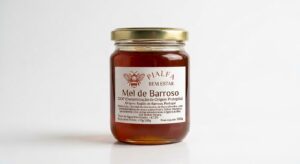
Portugal has several protected designations of origin (PDO) for honey. Mel da Terra Quente PDO, from north-eastern Trás-os-Montes, comes from Mediterranean flora including heather, eucalyptus, lavender, broom and French lavender; it tends to be light amber and to crystallise. Mel de Barroso PDO, produced around Boticas, Chaves, Montalegre and Vila Pouca de Aguiar, is linked to the heath family, especially heather, and is usually dark and aromatic.
Mel do Parque de Montesinho PDO comes from the municipalities of Bragança and Vinhais. The natural flora includes heather, chestnut and rosemary, giving a multifloral mountain honey. Mel da Serra da Lousã PDO, from the hills and valleys of central Portugal, is known for its amber tones, viscous texture and notes of heather and woodland.
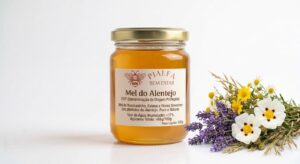
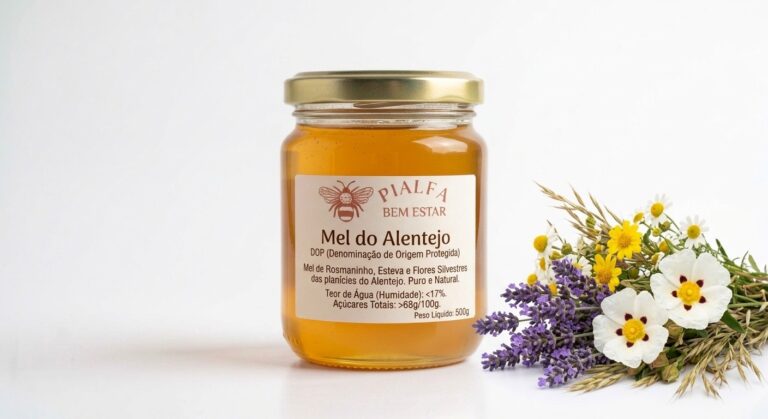
In the south, Mel do Alentejo PDO can be monofloral (French lavender, soagem, eucalyptus or orange blossom) or multifloral, depending on the stated origin. Mel dos Açores PDO includes the multifloral variety and Incenso honey, linked to the nectar of Pittosporum undulatum. Variety, island and batch help explain the differences in colour and aroma.
Other floral profiles
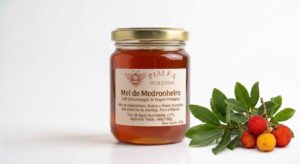
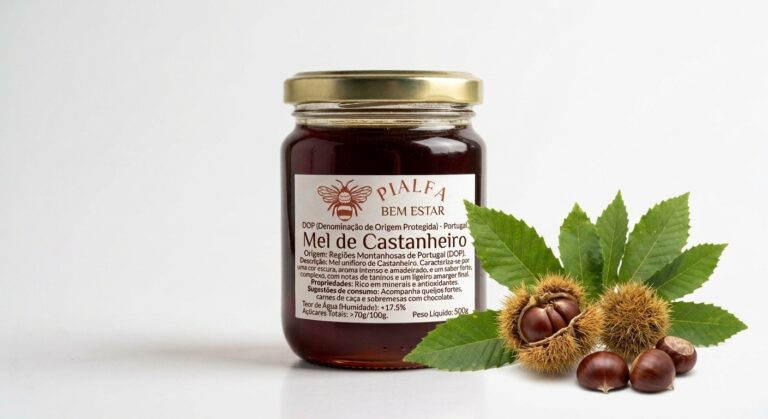
You will also find heather, chestnut, French lavender and strawberry tree honeys on the market. These names describe the dominant flower or the product’s commercial profile, but they do not automatically mean PDO. Geographic origin and any “monofloral” claim should be checked on the label and in the producer’s documentation. Heather honey is usually strong and dark; chestnut honey can have vegetal and nutty notes; French lavender honey is often more delicate; and strawberry tree honey, less common, can show a complex, slightly bitter profile.
How to choose quality honey
Start with the label. The ingredients list should identify the honey and, for blends, clearly declare any other ingredients such as walnuts, almonds, pollen or propolis. Look for the country or countries of origin, the name and address of the business, the batch number, net weight and best-before date. For a PDO product, check for the protected name and the matching EU logo. A “Portuguese” claim should match the origin information.
Quality cannot be judged by colour, flow or a home test alone. Honey can be runny, thick or crystallised; it all depends on its composition and temperature. Tests with water, matches or your thumb are no substitute for laboratory analysis and can be misleading. Be wary of absolute purity claims or promised effects on the body that are not properly supported. For an informed choice, go for identified producers, traceability and clear information.
Storage and crystallisation
Keep the jar tightly closed in a cool, dry place, away from light, heat and moisture. Always use clean, dry utensils so no water or particles get in. Honey has little available water, but moisture added during use can encourage unwanted changes. Follow the date and label instructions, especially for blends with nuts or other ingredients.
Crystallisation is a natural process. Glucose can form crystals, making honey cloudy, grainy or creamy, without meaning it has gone off. Some honeys crystallise quickly; others stay runny for longer. If you prefer a liquid texture, warm the jar gently in a water bath without overheating it, and avoid repeated temperature swings. The taste and aroma should stay pleasant; a fermented smell, unusual separation or signs of spoilage are reasons not to eat it.
Simple ideas for the kitchen
Use honey to sweeten plain yoghurt, porridge, roasted fruit or a warm drink. In small amounts it pairs well with fresh or aged cheese, walnuts and almonds. It works in a vinaigrette with olive oil and vinegar, a marinade for vegetables or a sweet-and-sour sauce for roasts. With nut blends, stir gently and always check the declared allergens. To explore each origin, first taste a little of each honey with plain bread and note its colour, aroma, flavour and texture.
Safety: babies under 12 months
Honey should not be given to babies under 12 months, even if pasteurised or used in recipes. This advice relates to the risk of infant botulism linked to spores that may be present in honey. After that age, follow your health professional’s advice and read the label, especially where there are allergies or added ingredients.
To see our selection, visit the online shop and our page dedicated to Portuguese honey.
Sources
Partilhar
Facebook
Twitter
Pinterest
Artigos recentes