We open a jar, take a spoonful and rarely think about the journey that honey made to reach the table. Between the flower and the jar there are months of work by the bees and several stages in the beekeeper’s hands, each with its own care. Knowing that journey helps explain why well-handled honey tastes of its landscape, and why two jars from the same region can be slightly different. In this article we follow honey from the hive all the way to the label.
First, the bees do their work
It all starts with nectar, the sugary liquid that flowers produce. Forager bees collect it and carry it back to the hive, where other bees pass it from one to another, adding enzymes. They then store it in the wax cells and fan their wings to evaporate the water. Once the nectar is down to about 17 to 18% moisture, it is honey. At that point the bees seal each cell with a thin layer of wax, which beekeepers call the capping.
That capping is the most important sign for anyone working with honey: it shows the honey is ripe and ready to keep for a long time without fermenting.
The harvest: choosing the right moment
Harvesting means removing the frames full of honey from the hives. A good beekeeper never takes everything: there are always enough stores left for the bees to get through winter. Nor do they take frames that still have many uncapped cells, because that honey would hold too much water.
The timing of the harvest decides the kind of honey. If it happens right after the lavender bloom, for example, the result is a light, floral honey such as our Spanish Lavender Honey. If the beekeeper waits until summer in chestnut country, the honey will be dark and aromatic. We explain these seasons in more detail in our article on the Portuguese honey calendar.
To take the frames without stressing the colony, beekeepers use gentle smoke, which calms the bees, and a soft brush to move them aside. The work is done on warm days, ideally around midday, when many bees are out foraging.
In the honey house: uncapping and extracting
The frames go to the honey house, a clean, enclosed room where the honey is extracted. The first step is uncapping, which means removing the wax layer that seals the cells. This is done with a special fork or a knife that slices off just the surface.
The frames then go into the extractor, a kind of stainless steel centrifuge. As it spins, the honey flies out of the cells and runs down the walls to the bottom. The comb stays almost intact and the frames can go back into the hives, which saves the bees the huge effort of building new comb.
The cappings wax is not thrown away. Once drained, it is melted down and reused for new wax foundation, candles or simple cosmetics.
Straining without stripping the honey’s soul
Freshly extracted honey carries small bits of wax and sometimes a stray bee. So it passes through sieves or fairly coarse mesh filters. The goal is to clean it, not to sterilise it. Artisan honey keeps its pollen and many of the fine particles that give it character.
In industry, some honeys are pressure-filtered and heated to high temperatures so they look crystal clear and take longer to crystallise. They look perfect, but part of the aroma and natural enzymes is lost. That is one reason it pays to know how to tell real honey from adulterated honey or over-processed honey.
Maturing and resting
After straining, the honey goes into stainless steel tanks called settling tanks. It rests there for a few days. During that time, air bubbles rise and the last wax particles float to the top, forming a thin foam that the beekeeper skims off before jarring. This simple step makes a big difference to the final look and to how well the honey keeps.
This is also when many producers measure moisture with a refractometer. If it is above the recommended level, the honey risks fermenting and should not be jarred as it is.
Jarring and labelling
The honey is then poured into clean, dry glass jars and sealed tightly. Glass does not pass on smells or flavours and lets you see the colour and texture of the honey. The label must show, among other things, the origin, the batch and the best-before date. For single-flower honeys, the name should only be used when that flower genuinely predominates.
From then on, the honey may crystallise over time. It has not gone off and it has not been adulterated: it is a natural process, explained in our article on crystallised honey.
Why every jar is unique
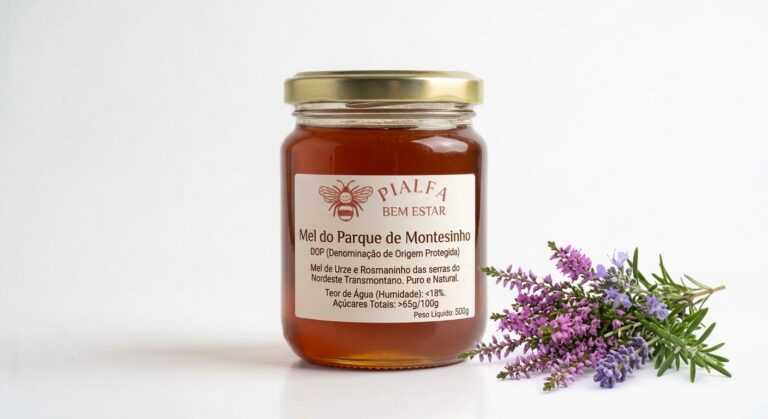
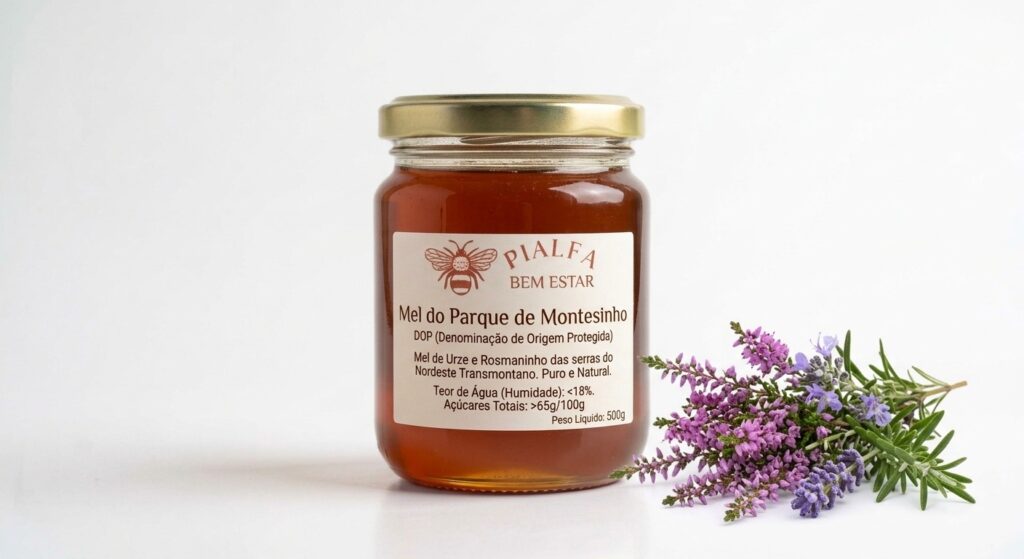
Put it all together and it is clear why honey changes from year to year. The rain changes, the bloom changes, the timing of the harvest changes. A Montesinho Park Honey from a dry summer will not be exactly the same as the next year’s, and that is exactly what makes it interesting. The same goes for Barroso Honey or Strawberry Tree Honey, which depends heavily on a mild autumn.
At home, the care continues: a tightly closed jar, a dry spoon and a cool spot away from the sun. You will find more tips in how to choose and store Portuguese honey.
From the apiary to your table
In the pi alfa shop we bring together honeys from several regions of Portugal, all handled with the same respect for the product. Orders ship within 24 hours, shipping is free to Portugal and the whole European Union on orders from €50, and every box includes a small honey as a gift. If you don’t have an account yet, sign up before your first order and get 10% off.
Partilhar
Facebook
Twitter
Pinterest
Artigos recentes