
On 11 November, all over Portugal, bonfires are lit, chestnuts are roasted and the year’s first jeropiga (a sweet fortified wine) is opened. St Martin’s Day is one of the most popular festivals in the Portuguese calendar — and a good excuse to bring honey to the table. Chestnuts and honey often come from the same hills, and they go together far better than you might think.
A little history: St Martin’s summer
Legend has it that Martin, a Roman soldier, cut his cloak in half to share it with a beggar shivering in the cold. At that moment the clouds parted and the sun came out. That’s where the expression “St Martin’s summer” comes from — those mild days that often appear in mid-November.
Over time, the date came to mark the end of the autumn harvest. In the countryside it was the time to taste the new wine and enjoy freshly gathered chestnuts. Hence the Portuguese saying everyone knows: “On St Martin’s Day, go to the cellar and taste the wine.” The magusto — the bonfire around which chestnuts are roasted — brought the whole village together, and it is still held today in schools, community clubs and back gardens.
Why chestnuts and honey go together
Chestnuts are sweet, floury and take on a light smoky flavour when roasted. Honey adds shine, aroma and a different, more floral sweetness. Together they make a kind of rustic dessert that needs nothing else.
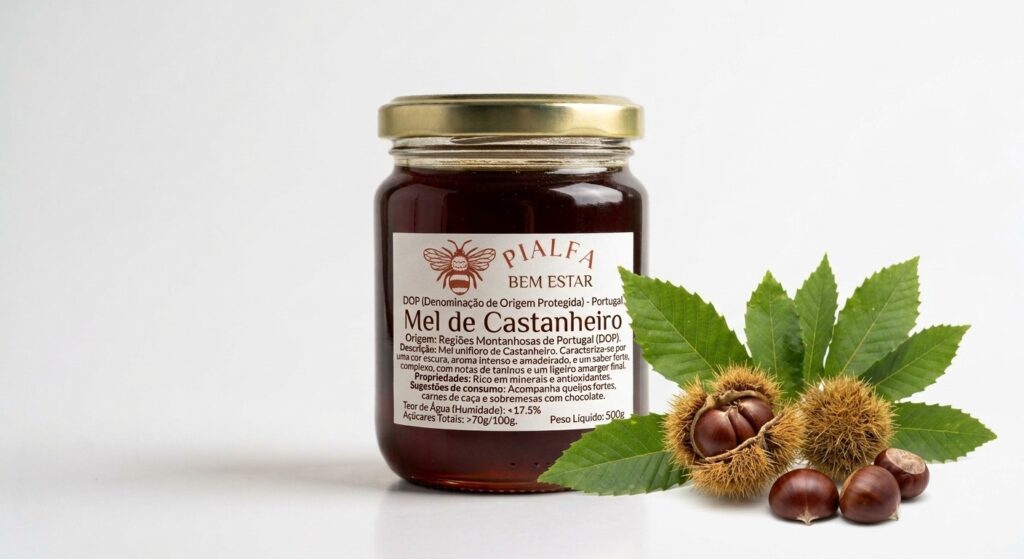
There’s a curious connection too: in chestnut-growing areas such as Trás-os-Montes and Beira Interior, bees use the June bloom to make chestnut honey — dark, intense and slightly bitter on the finish. Serving chestnuts with this honey essentially brings together two things born from the same tree. To find out more, read our article on the taste, colour and uses of chestnut honey.
Recipe 1: roast chestnuts with honey and flor de sal
The simplest of all, and perhaps the best loved.
- 500 g chestnuts
- 2 tbsp chestnut or heather honey
- 1 tbsp butter
- Flor de sal, to taste
Score each chestnut with a sharp knife so they don’t burst. Roast in the oven at 220 °C for 25–30 minutes, or in a chestnut pan on the hob. Peel them while still hot and place in a bowl. Melt the butter with the honey over a low heat, pour over the chestnuts, toss well and finish with a pinch of flor de sal. The contrast between salt and honey is what makes it special.
Recipe 2: chestnut purée with honey to serve with meat
An alternative to mashed potato that goes beautifully with pork loin, turkey or game.
- 400 g cooked, peeled chestnuts
- 200 ml milk
- 1 tbsp butter
- 1 tsp honey
- Salt, pepper and nutmeg
Warm the chestnuts in the milk for ten minutes. Blend with a stick blender, then add the butter, honey, salt, pepper and a grating of nutmeg. If it’s too thick, add a little more milk. The teaspoon of honey doesn’t make the purée sweet — it just rounds out the flavour. For more ideas like this, see our article on honey in savoury cooking.
Recipe 3: honey-glazed chestnuts for dessert
A different way to end your St Martin’s dinner.
- 300 g cooked, peeled chestnuts
- 4 tbsp honey
- 1 cinnamon stick
- Peel of half an orange
- 50 ml water
Put the honey, water, cinnamon and orange peel on the heat. When it comes to the boil, add the chestnuts and simmer gently, stirring now and then, until the syrup thickens and the chestnuts are glossy. Serve warm with a spoonful of Greek yoghurt or ricotta. Kept in a sealed jar, they last a few days in the fridge.
Which honey to choose for the magusto
It depends on your taste, but a few suggestions work well:
- For lovers of bold flavours: chestnut honey or heather honey, both dark and full-bodied.
- For a milder taste: Terra Quente honey, golden and rounded, pleases young and old alike.
- For texture: Honey with Walnuts adds a crunch that goes very well with roast chestnuts.
And to drink?
Tradition calls for jeropiga or água-pé, but not everyone drinks alcohol. A good alternative for children and drivers is a hot orange-peel and cinnamon tea, sweetened at the end with a spoonful of honey. Let the tea cool slightly before adding the honey so you don’t lose the aroma. We explain why in our article on honey in hot drinks.
Little tricks for perfect chestnuts
- Choose heavy, shiny chestnuts with no holes. Those that float in water are usually dry or have worms.
- Soak them in warm water for half an hour before roasting. They’ll be softer and easier to peel.
- After roasting, wrap them in a tea towel for five minutes. The steam loosens the skin.
- Eat them hot. A cold chestnut loses half its charm.
A St Martin’s Day that tastes of the hills
St Martin’s Day is a celebration of sharing, just like the cloak that started it all. A bowl of chestnuts in the middle of the table, a jar of Portuguese honey beside it and the family gathered round are all you need for a great evening. If you don’t have honey at home yet, browse our full selection of Portuguese honeys in the shop. We dispatch within 24 hours with free shipping across the European Union on orders over €50, and every order includes a small complimentary honey.
Partilhar
Facebook
Twitter
Pinterest
Artigos recentes