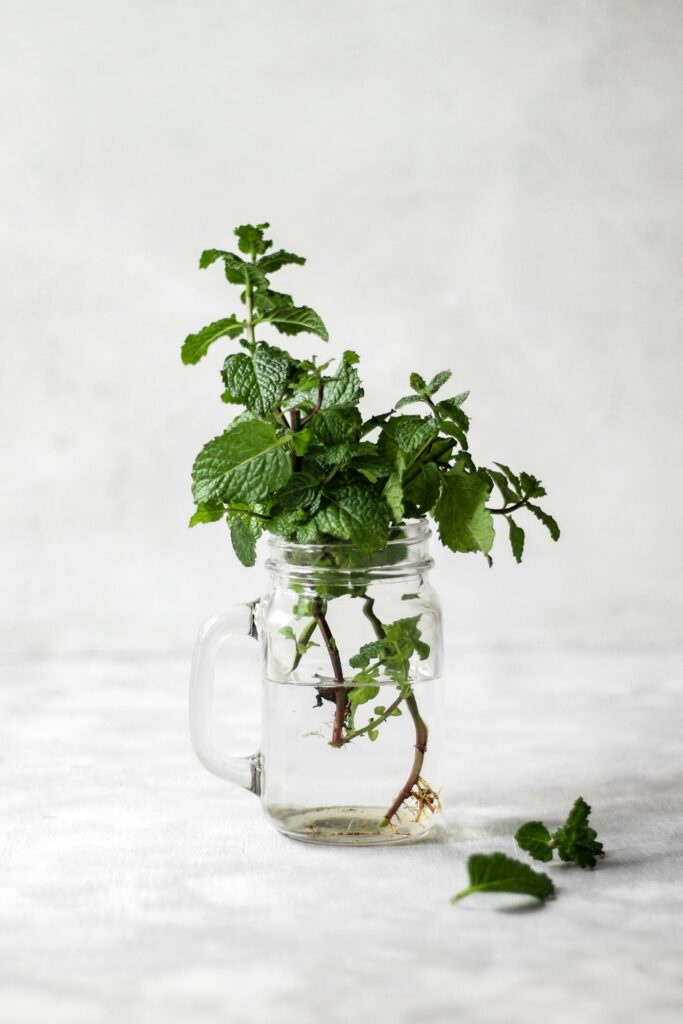
Sometimes wellbeing fits in a single leaf. Mint picked in a hurry, crushed into the lunchtime water jug, and the table already smells fresh.
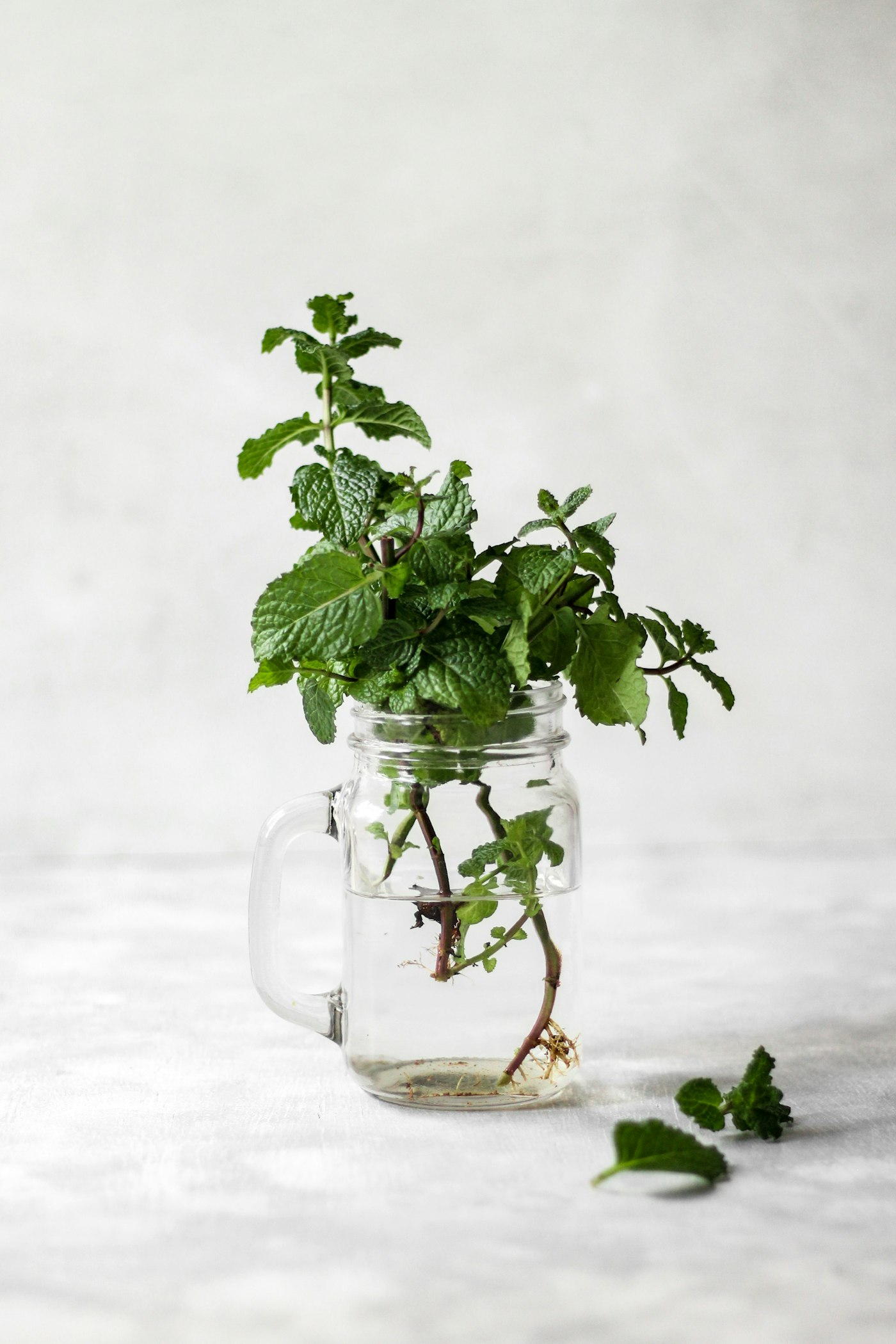
The mint from the kitchen windowsill pot
Few herbs are as immediate as mint: rub a leaf between your fingers and the aroma changes the room. In Portugal and across the Mediterranean it appears in peppermint or spearmint tea, fruit salads, yoghurts and summer dishes. It is a herb of quick gestures — perfect for wellbeing without ceremony.
What popular science tends to highlight
Healthline and WebMD articles on mint describe essential oils (such as menthol) that create the feeling of freshness. Nutritionally, the leaves contribute small amounts of vitamins and plant compounds; day to day, the main appeal remains sensory and cultural.
Menthol and freshness
Menthol activates “cold” receptors in the mouth and nose — hence the refreshing sensation. That explains its use in iced teas, infused water and light desserts.
Ideas for mindful breaks
- A jug of water with mint and lemon slices on your desk.
- Mint tea mid-afternoon, instead of yet another unfiltered social-media scroll.
- Cucumber salad with fresh cheese and chopped mint.
- Summer fruit topped with whole leaves.
If you grow it in a pot, pick it in the morning and use it quickly: the aroma is most generous when the leaf is crisp.
A healthy lifestyle without the drama
Mint does not “fix” stress. But a two-minute ritual — water heating, leaves in the cup, sitting by the window — creates a marker for a pause. It is that marker, repeated, that supports a more attentive lifestyle.
Keep reading
- Complete Honey Guide
- Honey and Natural Energy in Your Daily Rhythm
- The role of honey in wellbeing routines
Note: informative and cultural text about wellbeing, tradition and lifestyle. It does not replace professional health advice. Honey is not recommended for children under 12 months. For topical use, do a patch test and read the labels.